
For years, the world chose white walls, empty shelves and the quiet rule of less is more. But India never did. Indian maximalism, layered, colourful, and deeply meaningful, is now one of the most influential design movements in the world. Here is where it comes from, and why it matters.
While the rest of the world was painting its walls white, India never stopped adding colour.
My French Studio and the Aesthetic I Did Not Know I Had
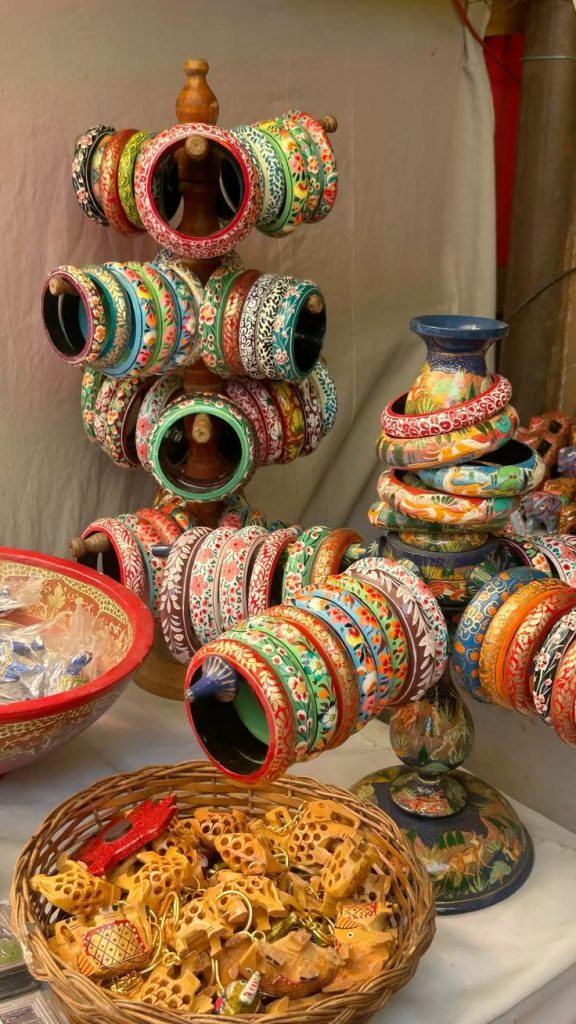
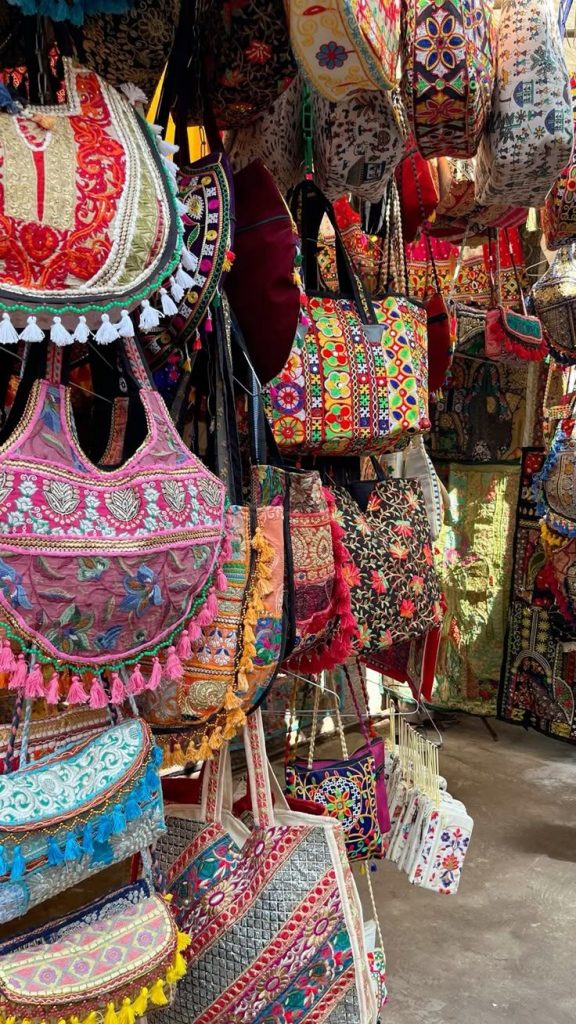
My first studio apartment in the suburbs of Paris was entirely white. The walls, the cupboard doors, the window frames, the bed sheets, the pillows, the duvet. Even the wooden floor felt cold and empty. It was a very European kind of clean. A perfect example of minimalist interior design.
Then I started to unpack.
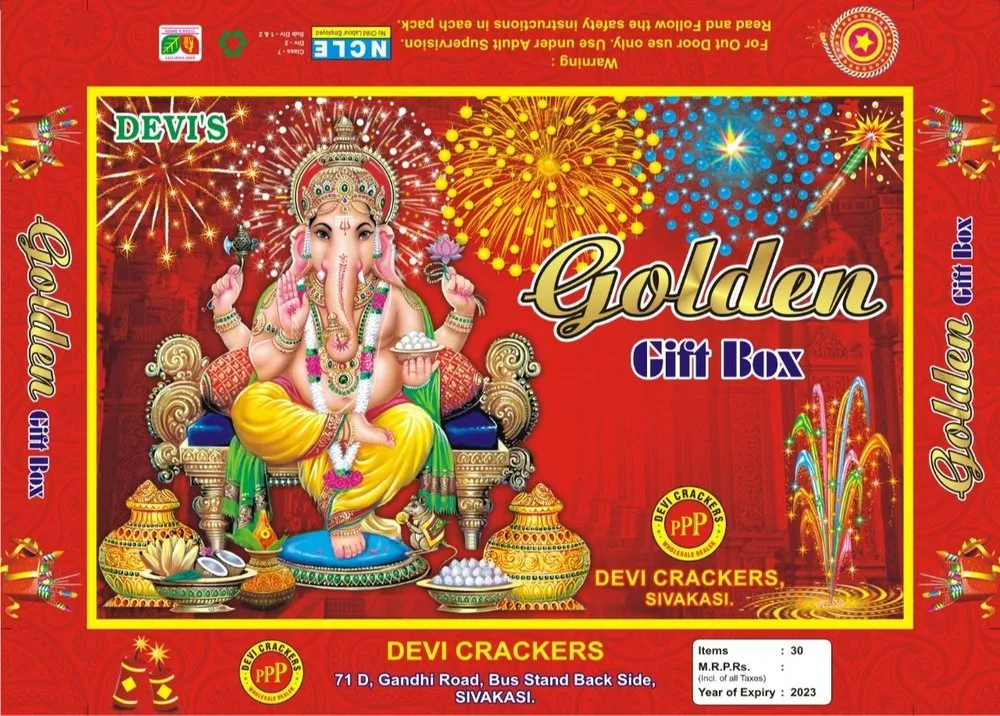
My jewellery stand appeared, filled with earrings, necklaces and bracelets, each one detailed and bright. A bed sheet set with bold colours and patterns replaced the white ones. My kitchen shelf slowly filled with Indian snacks in their loud, colourful packaging. I hung my kurtas in the wardrobe, too delicate for the Paris cold but too beautiful to leave behind. On my study table, I placed a small Ganesha idol on a piece of bright red cloth with a gold border, with a few flowers around it as an offering. Even the plastic storage bags, printed with traditional Indian motifs, sat in the corner holding my things.
I did not plan any of this. I was just unpacking.
But when I stepped back and looked at the room, the white minimalist studio was gone. In its place was something warmer, louder, and deeply familiar. Without trying, I had created a maximalist space. It was layered, colourful, full of meaning. It was Indian maximalism in its most honest form.
It looked, somehow, like home.
Today, what I recreated instinctively in that small studio is becoming a global design movement. Indian maximalism is appearing in interior design, in fashion, and all over social media. After years of white walls, neutral tones and the quiet rule of less is more, people are ready for something richer.
But where does this aesthetic come from? And why is the world finally paying attention?
Maximalism and Indian Maximalism: What Is the Difference?
Maximalism is a design style. It is the opposite of minimalism. Where minimalism says sophistication, simplicity and less is more, maximalism says self-expression, abundance and more is more.
A maximalist space has many colours, many patterns, many objects and many textures all in the same room, all at the same time. It is bold. It is layered. It is full.
In western interior design, maximalism is a choice. It is a reaction. For years, minimalism was the dominant trend: clean lines, neutral colours, empty surfaces. Then people grew tired of it. They wanted personality. They wanted colour. They wanted their homes to feel alive. So western maximalism became a statement. It is carefully curated. It mixes vintage furniture with modern art, printed wallpaper with bold rugs and decorative objects. It is intentional, often expensive, and very much a trend.
Indian maximalism is something different. It was never a trend. It was never a reaction to anything. It has always simply been there.
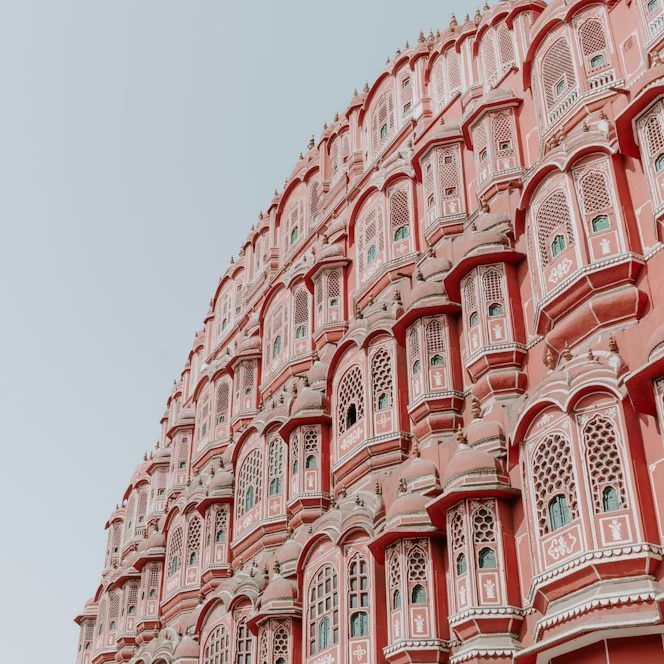
In India, layering colour, pattern and decoration is not a design decision. It is a way of life. It comes from centuries of tradition, faith, craft and celebration. Every object in an Indian home comes with a story. The brass lamp was a wedding gift. The embroidered cushion cover came from a specific region. The idol on the shelf has been in the family for generations. Indian maximalist interiors are not curated. They are lived in. They are built slowly, over time, through rituals, relationships and everyday life.
The biggest difference is this: western maximalism is about aesthetic. Indian maximalism is about meaning. One is a style you choose. The other is a culture you carry.
The History of Indian Maximalism: Not Decoration but Devotion
To understand Indian maximalism, you have to understand one thing first. In India, beauty has never been separate from belief. For thousands of years, colour, pattern and ornament were not ways to make something look nice. They were ways to honour something greater.
This is where it all begins.
The Ancient Temples
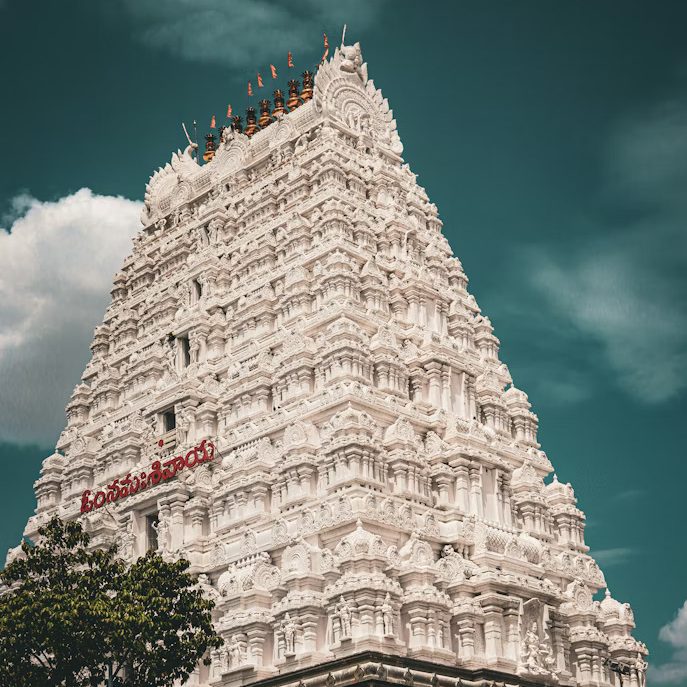
Look at any ancient Hindu temple in India and you will immediately understand maximalism. Every surface is covered. The walls, the columns, the ceilings, the entrance gates, all of them are carved with figures, flowers, animals, gods and stories. This was not random. Every carving had a meaning. Every symbol told a story from Hindu mythology. The more detailed and abundant the temple, the greater the devotion it expressed.
In South India, the famous gopurams which are the tall, colourful entrance towers of Hindu temples are perhaps the most maximalist structures in the world. They are covered from bottom to top with hundreds of brightly painted sculptures. Nothing is left empty. Every centimetre is filled with life.
The idea “empty space is a missed opportunity” became deeply rooted in Indian visual culture.
The Mughal Influence


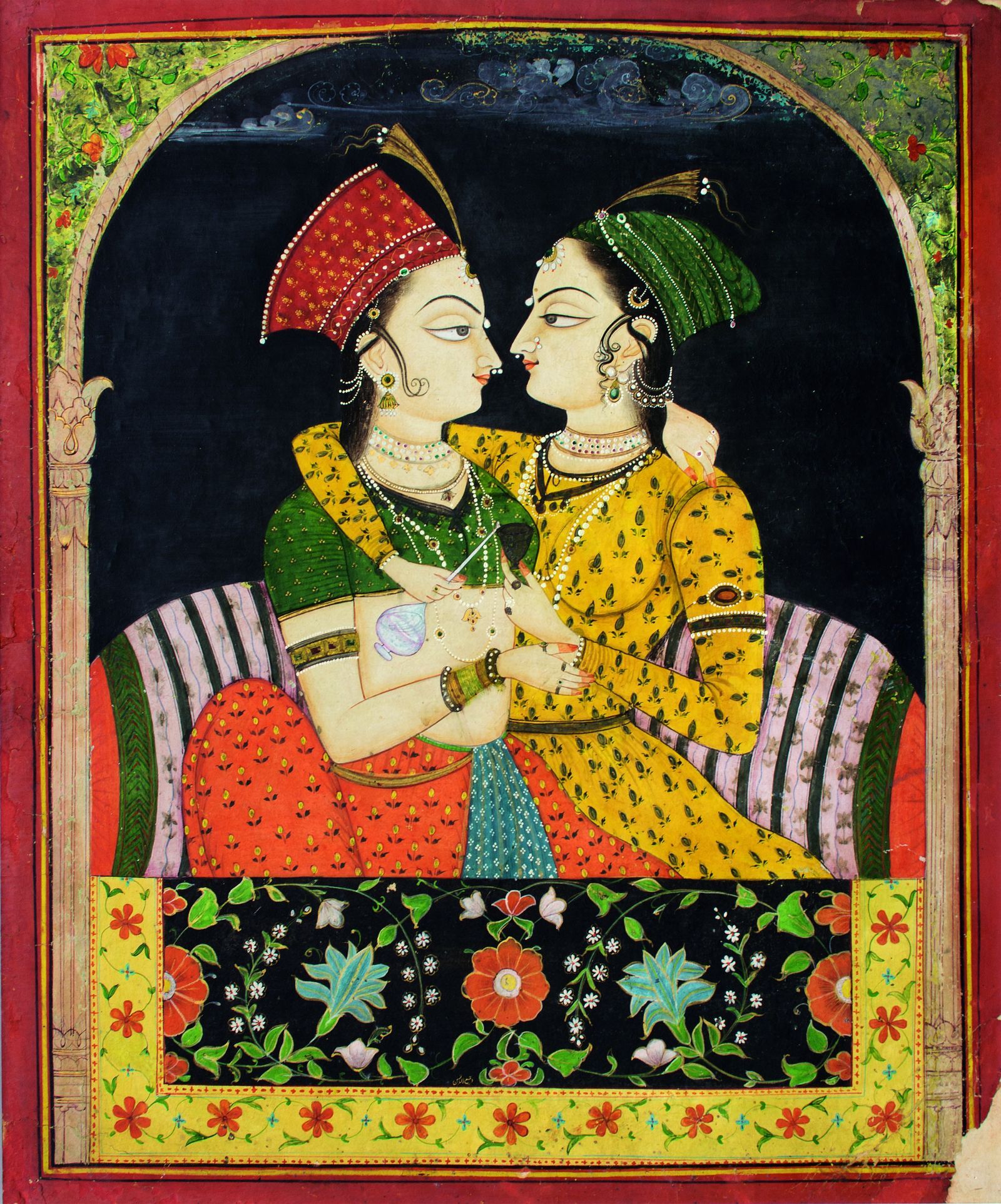
In the 16th and 17th centuries, the Mughal emperors ruled a large part of India. They brought with them a love of luxury, detail and grandeur that changed Indian aesthetics forever. The Mughal architecture can be seen in some of the most beautiful buildings in the world such as the Taj Mahal, the Red Fort, the palaces of Rajasthan. All of them share one quality: they are intensely detailed. Marble inlaid with precious stones. Walls covered in geometric patterns. Archways decorated with floral designs. Ceilings painted in gold.
The Mughals also transformed Indian textiles. They introduced new rich embroidery techniques like zardozi which is heavy embroidery made with gold and silver thread that are still used today on wedding clothes and traditional garments. They mixed Persian, Central Asian and Indian design languages together, creating something entirely new and entirely abundant.
The Craft Traditions


Across India, every region developed its own visual language. Its own colours, its own patterns, its own techniques. And most of them, in their own way, were maximalist.
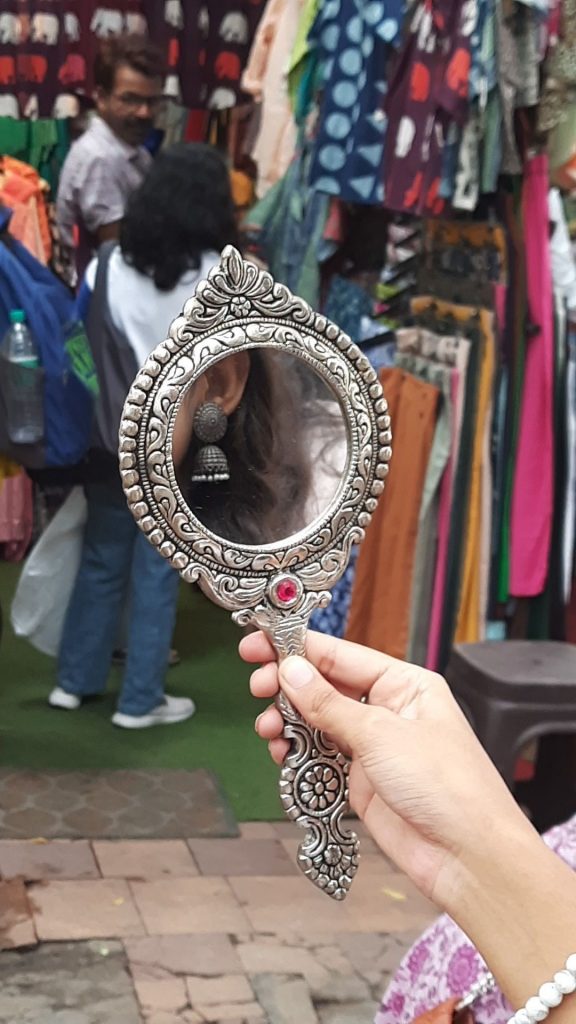
In Rajasthan, artisans developed block printing: a technique of stamping repeated patterns onto fabric using carved wooden blocks. In Gujarat, women embroidered their clothes and home textiles with tiny mirrors and bright thread, a tradition called mirror work. In Varanasi, weavers created the famous Banarasi silk sarees that are heavy, rich fabrics woven with gold and silver thread in intricate floral and paisley patterns. In Kerala, temples were decorated with thousands of flowers arranged into elaborate patterns for festivals, a tradition called pookalam that is still practised today.
Each of these traditions was passed down from generation to generation. Over centuries, they became part of the identity of each region.
Festivals and Everyday Life
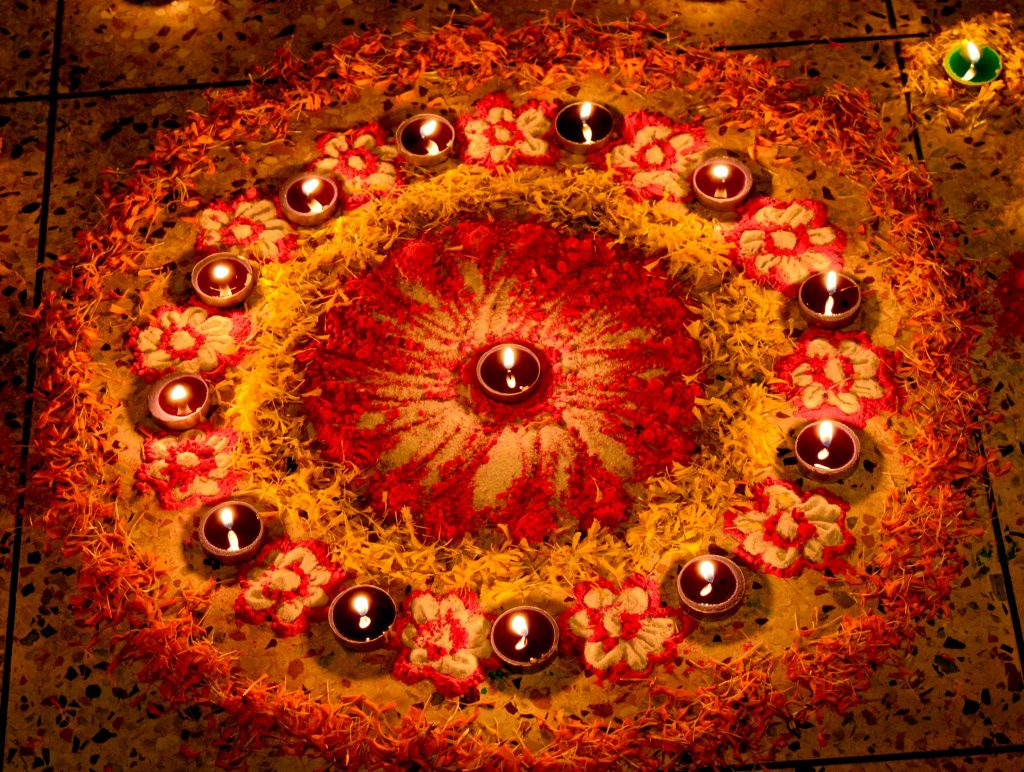
Perhaps the biggest reason maximalism became so embedded in Indian culture is the calendar. India has hundreds of festivals throughout the year. Diwali fills homes and streets with oil lamps, candles, flower garlands and colourful powder. Holi covers everything and everyone in bright pigment. Navratri fills the streets with dancers in embroidered costumes.
In India, the extraordinary is not reserved for rare moments. It comes around again and again, every few weeks, every season. And so the habit of decorating, layering and adorning became part of everyday life. Not something you do once a year. Something you simply do.
The Colonial Period and After
When the British colonised India, they brought with them a very different aesthetic. Clean lines. Functional design. Simplicity. For a long time, Indian maximalism was looked down upon by colonial eyes. It was called chaotic. Excessive. Uncivilised.
But maximalism never disappeared. It survived in the villages, in the temples, in the markets, in the homes of people who simply continued living the way they always had. It survived in the hands of craftspeople who kept making block printed fabrics, embroidered textiles and carved wooden furniture.
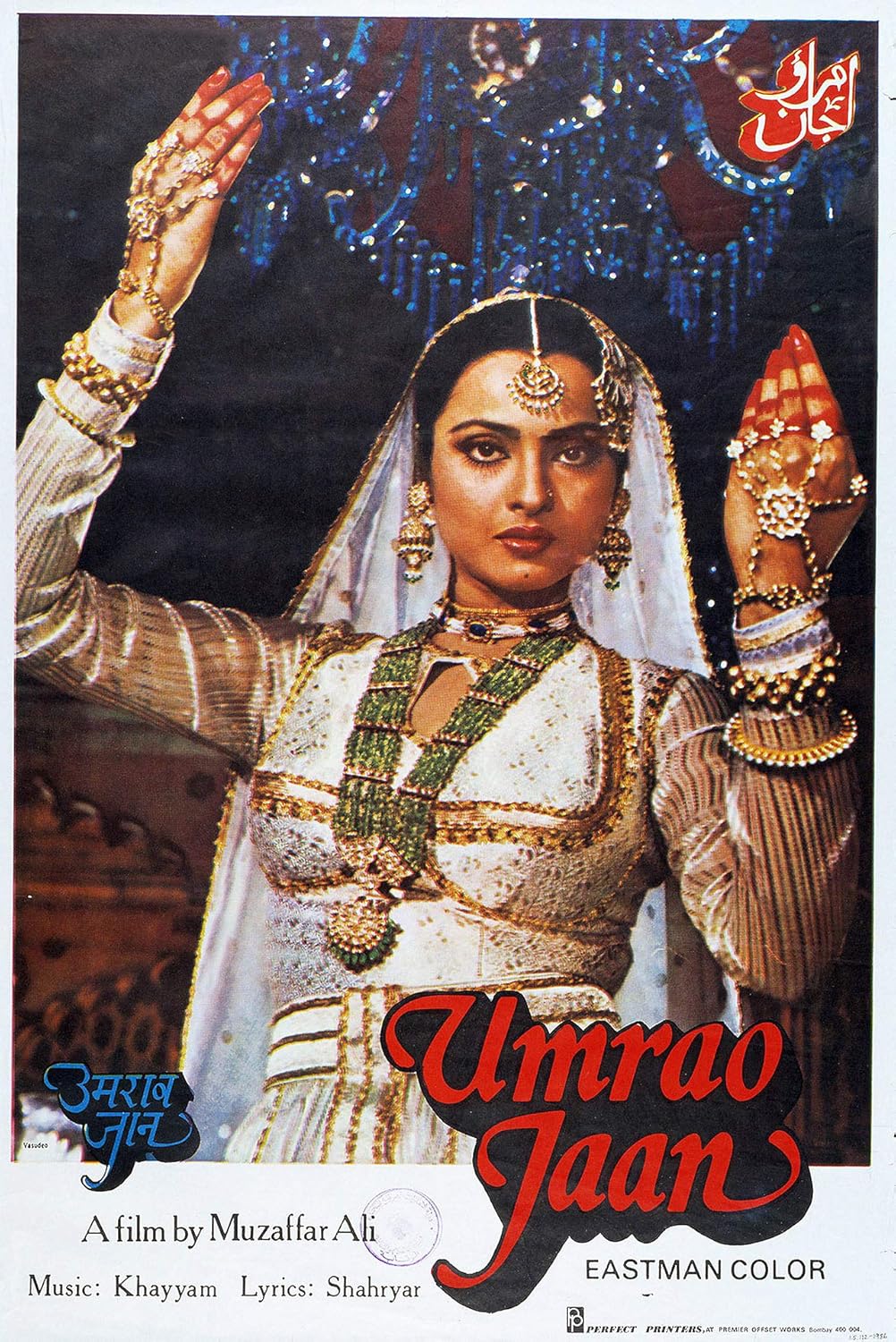
After India gained independence, eventually there came a renewed pride in Indian culture and identity. And then came Bollywood which brought Indian maximalism to its most spectacular form. The costumes, the sets, the dance sequences, all of them celebrated colour, abundance and spectacle on a massive scale. For hundreds of millions of people, Bollywood became the visual language of joy.
Indian Maximalism and the Diaspora: The Suitcase Full of Colour
When Indians leave India, they do not leave empty handed.
They leave with suitcases full of spices, pickles, fabrics and objects that have no practical reason to travel thousands of kilometres, except that leaving them behind feels impossible. A small idol. A brass cup. A set of embroidered pillow covers. Things that carry no monetary value but an enormous amount of meaning.
This is how Indian maximalism travels.
The Indian diaspora is one of the largest in the world. There are Indian communities in the United Kingdom, the United States, Canada, Australia, France, the Gulf countries and across Southeast Asia. Millions of people who were born in India, or whose parents were born in India, are now living their lives in cities that look nothing like the place their family came from. And yet, if you walk into many of their homes, you will recognise something familiar.
Building Home Somewhere Else: For the Indian diaspora, maximalism is not an aesthetic choice. It is an act of belonging. When you are far from home, objects become more than objects. The Ganesha idol on the shelf is not just decoration. It is a connection to your grandmother’s house. The embroidered bedsheet is not just a pattern. It is a memory of a market you visited as a child. The smell of incense in the morning is not just a ritual. It is proof that even in a foreign city, something of home still exists. Indian diaspora homes are often a beautiful collision of two worlds. A modern European sofa sits beside a hand embroidered Indian cushion. A minimalist Scandinavian kitchen holds jars of bright Indian spices. On a clean white wall hangs a traditional Indian painting or a framed image of a god. These homes do not try to choose between two identities. They hold both at the same time.
A New Generation, A New Pride: For a long time, some second generation Indians felt caught between two cultures. The abundance of the Indian home sometimes felt like something to hide: too loud for the world outside. But something has shifted. Today, a new generation of the Indian diaspora is embracing their visual heritage with pride. On social media, young Indians are sharing their home décor, their traditional clothes, their festival decorations and their family rituals: not with apology, but with celebration. Indian maximalism has become a way of saying: this is who I am, and I am not going to make it smaller. This shift is not just personal. It is cultural. And it is changing the way the world sees Indian aesthetics.
Indian Maximalism Today: From Living Rooms to Runways
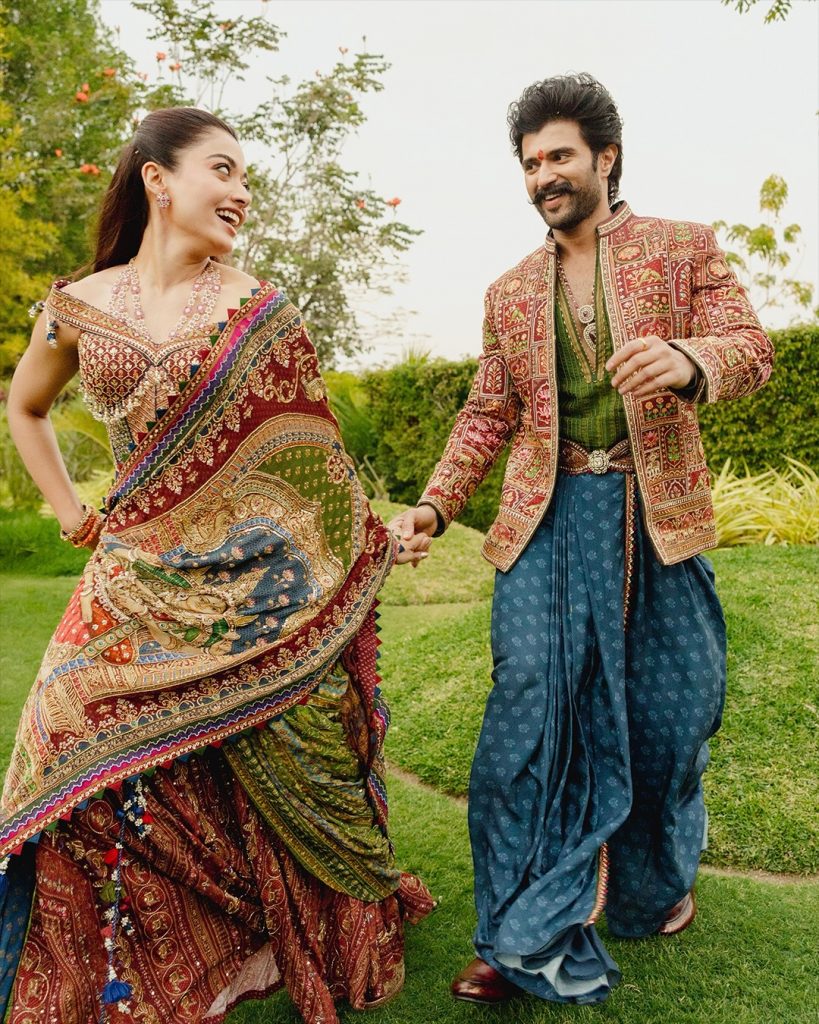
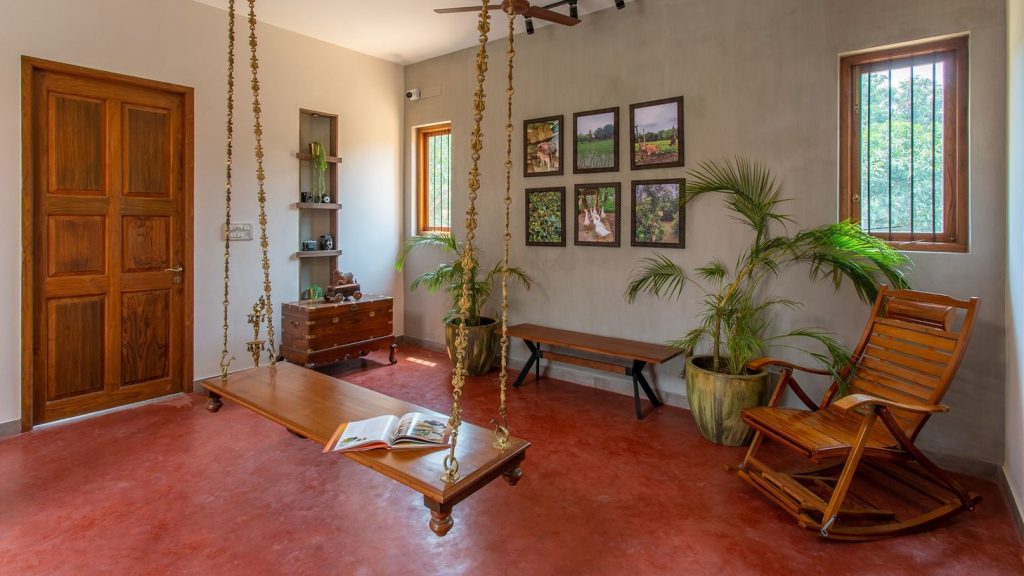
Indian maximalism is no longer just something you find in Indian homes. It is everywhere.
On the global fashion runways, designers like Manish Malhotra, Sabyasachi Mukherjee and Rahul Mishra have brought Indian maximalist aesthetics to an international audience. Heavy embroidery, rich silk, bold colour combinations and traditional Indian motifs are now celebrated in Paris, New York and Milan. Sabyasachi in particular has become a global symbol of Indian maximalism. His designs unapologetically rich, layered with fabric and intricate hand embroidery in deep jewel tones. He has made it very clear that Indian aesthetics do not need to be simplified to be appreciated.
Inside the Home: In interior design, Indian maximalism is becoming one of the most searched aesthetics online. People are looking for bold, jewel toned colour palettes, deep blues, rich greens, warm terracotta, saffron orange. They are looking for layered textures, embroidered cushions, block printed curtains, carved wooden furniture, brass decorative objects. They are looking for spaces that feel full of life, full of history, full of personality.
The Return of Indian Craft: One of the most important parts of the Indian maximalism trend today is the renewed global interest in traditional Indian craft. Block printed fabrics from Rajasthan, hand embroidered textiles from Gujarat, Banarasi silk from Varanasi, blue pottery from Jaipur; all of these are being rediscovered and celebrated. Many IIndian and foreign designers are working directly with traditional artisans, bringing ancient techniques into a contemporary context. Indian maximalism, in this sense, is not just a visual trend. It is helping to keep a living cultural heritage alive.
Social Media and the Global Conversation: Social media has played a huge role in bringing Indian maximalism to the world. Platforms like Instagram and Pinterest are deeply visual. And Indian maximalism is, above everything else, a visual language. Bright colours, intricate patterns and layered textures photograph beautifully. They stop you from scrolling. They make you look. Indian creators, designers, decorators and artists are sharing their world online and reaching audiences they never could have reached before. Slowly, one image at a time, the world is learning to see what Indians have always seen. That more can be more. That abundance can be beautiful.
More Than a Trend
Indian maximalism is having a moment. But it is important to remember one thing: for India, this is not a moment. It is a millennia.
What the world is now discovering and falling in love with is something that has existed for thousands of years. In ancient temple carvings. In Mughal palaces. In the embroidered textiles of Rajasthan. In the flower decorations of Kerala. In the bright sarees of everyday women going about their everyday lives. In the small mandirs tucked into the corners of ordinary homes.
Indian maximalism was never waiting to be discovered. It was simply waiting to be seen.
What it offers the world is not just a new colour palette or a new set of decorating rules. It offers a completely different way of thinking about what a home is for. In the Indian maximalist tradition, a home is a space to be lived in. Objects arrive over time, through relationships, rituals and journeys. Nothing is unnecessary, because everything carries a memory or a meaning. The goal is not simplicity. The goal is fullness. A life fully expressed in the space around you.
I think about that small Paris studio sometimes. The white walls that slowly disappeared behind colour and pattern. The Ganesha idol on my study table. The embroidered bedsheets. The Indian snacks on the kitchen shelf.
I did not know it then, but I was carrying something much bigger than my belongings. I was carrying a visual language. A way of seeing. A centuries old tradition that had been passed to me without anyone ever sitting me down and explaining it.
That is perhaps the most beautiful thing about Indian maximalism. It does not need to be taught. It simply lives in you. And wherever you go, it finds its way into the room.
The world is ready for more colour. More texture. More meaning on the walls.
India has always known this. Now, slowly, everyone else is beginning to understand.


